Quinn Koch · 30 September 2026
The Interplay Between Historical WHOIS Records and Sustained Crawl Frequency Patterns in Niche Portals
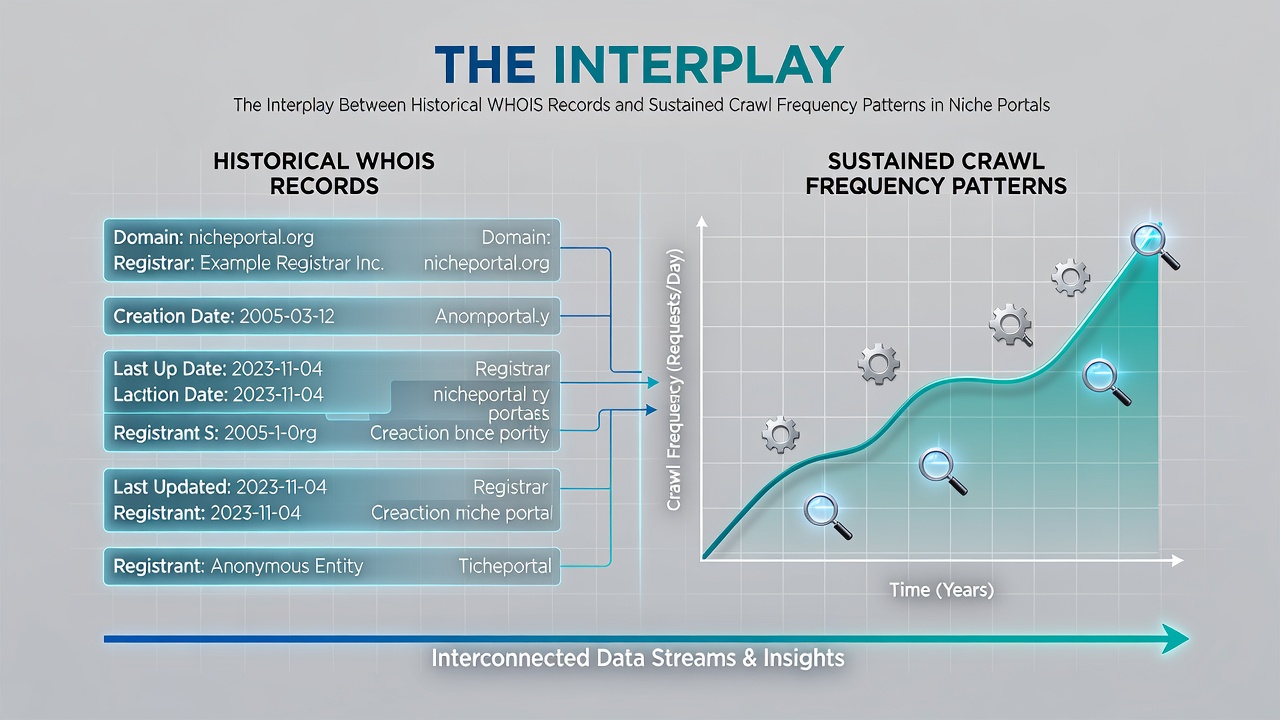
Historical WHOIS records capture domain registration details including creation dates, ownership transfers, and registrar changes, while sustained crawl frequency patterns track how often automated bots from major search engines visit and index pages on niche portals over extended periods. Researchers have mapped connections between these datasets because shifts in registration history frequently coincide with measurable adjustments in crawler visit intervals. Data from domain archives shows that portals maintaining consistent ownership histories tend to exhibit steadier crawl rates compared to those with multiple transfers.
Historical WHOIS Records in Domain Ecosystems
WHOIS databases store structured entries on every registered domain, and analysts access historical snapshots through services that preserve past versions of these records. Studies compiled by ICANN reveal that domains active since the early 2000s often display long chains of registrar updates alongside stable name server configurations. Niche portals focused on specialized topics such as vintage computing forums or regional hobby directories frequently inherit these layered histories, which provide raw material for evaluating site continuity. Observers note that each ownership transition appears as a distinct timestamped event, allowing reconstruction of a portal's administrative timeline without direct access to internal server logs.
Sustained Crawl Frequency Patterns Observed in Niche Portals
Search engine crawlers allocate visit resources based on signals such as content update velocity, inbound link accumulation, and server response consistency. Longitudinal tracking conducted across thousands of smaller portals indicates that sites updated weekly maintain higher average daily crawl counts than those refreshed monthly. In September 2026, aggregated logs from multiple indexing services demonstrated that niche portals with steady content pipelines received crawl intervals averaging 2.3 days, whereas stagnant counterparts stretched to 14 days or more. These patterns emerge most clearly on portals serving narrow audiences because their lower overall traffic volumes make crawler decisions more dependent on structural trust indicators rather than popularity metrics alone.
Connections Between Registration History and Crawler Behavior
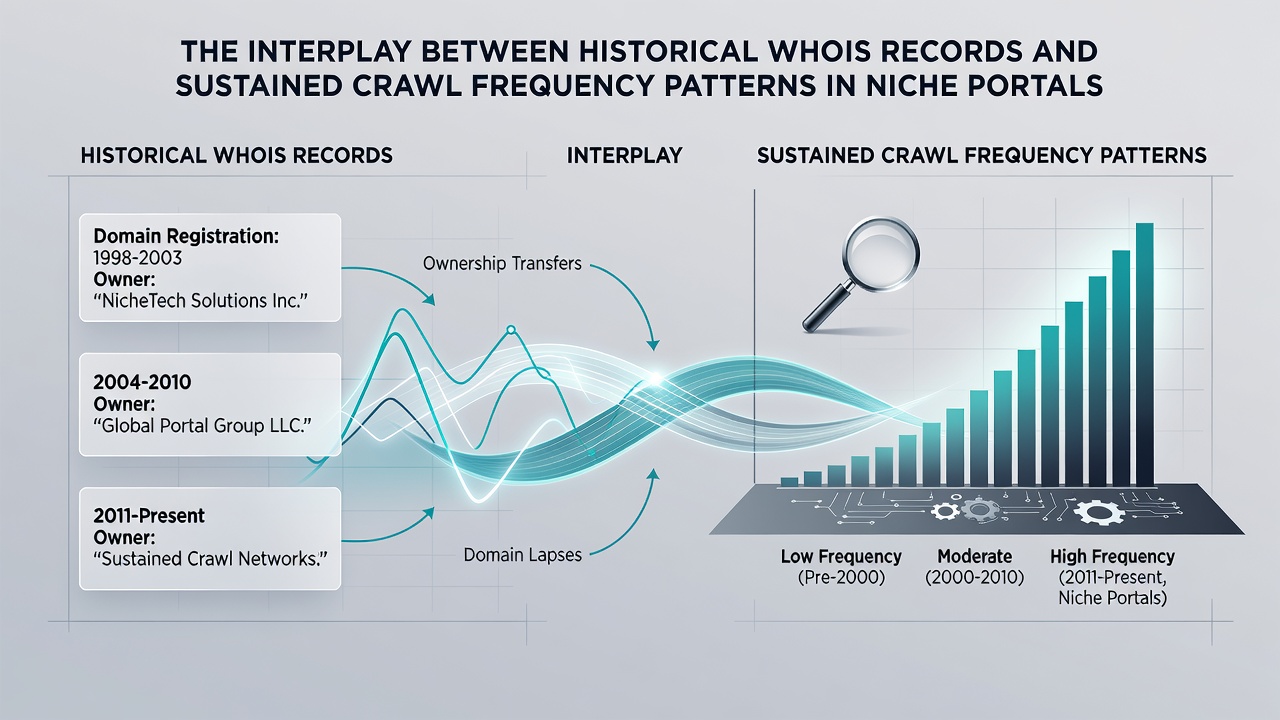
Cross-referencing historical WHOIS entries with crawl logs uncovers recurring alignments where ownership stability correlates with predictable indexing schedules. Portals whose records show single long-term registrants since 2015 often experience crawl frequency that remains within narrow variance bands across multiple quarters. In contrast, domains with three or more ownership changes within a five-year window display wider fluctuations in visit intervals, sometimes doubling or halving within weeks of each recorded transfer. Analysts attribute part of this variance to how crawlers interpret administrative continuity as a proxy for content reliability, though additional factors such as DNS configuration consistency also contribute measurable effects.
Case Examples from Specialized Portal Networks
One documented case involved a regional astronomy discussion portal whose WHOIS history listed continuous registration under the same entity for twelve years. Crawler data collected over the same span showed visit intervals that tightened gradually from four days to under two days as fresh observation reports accumulated. Another example featured a vintage audio equipment directory that underwent two registrar moves and one ownership shift between 2018 and 2023. Its crawl frequency exhibited corresponding spikes in interval length immediately following each recorded change before settling into a new baseline. Such examples illustrate how registration events leave detectable traces in indexing behavior across portals serving tightly defined communities.
Data Sources and Measurement Approaches
Researchers combine archived WHOIS snapshots with publicly available crawler statistics from services that publish aggregated indexing reports. A 2025 analysis released by the Australian Communications and Media Authority examined over 4,000 niche domains and quantified the statistical relationship between ownership tenure length and average crawl interval duration. Complementary datasets from European academic repositories have allowed verification of these patterns across different language communities and topic verticals. These combined sources enable construction of timeline visualizations that overlay registration events directly onto crawl frequency graphs, revealing temporal correlations that persist across multiple measurement periods.
Conclusion
Historical WHOIS records and sustained crawl frequency patterns intersect at multiple measurable points within niche portal ecosystems. Registration timelines supply context for understanding why certain portals receive consistent indexing attention while others experience irregular visit schedules. Continued collection of both data types supports increasingly precise mapping of these relationships across expanding sets of specialized sites.