Quinn Koch · 16 September 2026
Navigating Domain Shifts and Their Ripple Effects on Search Equity Preservation
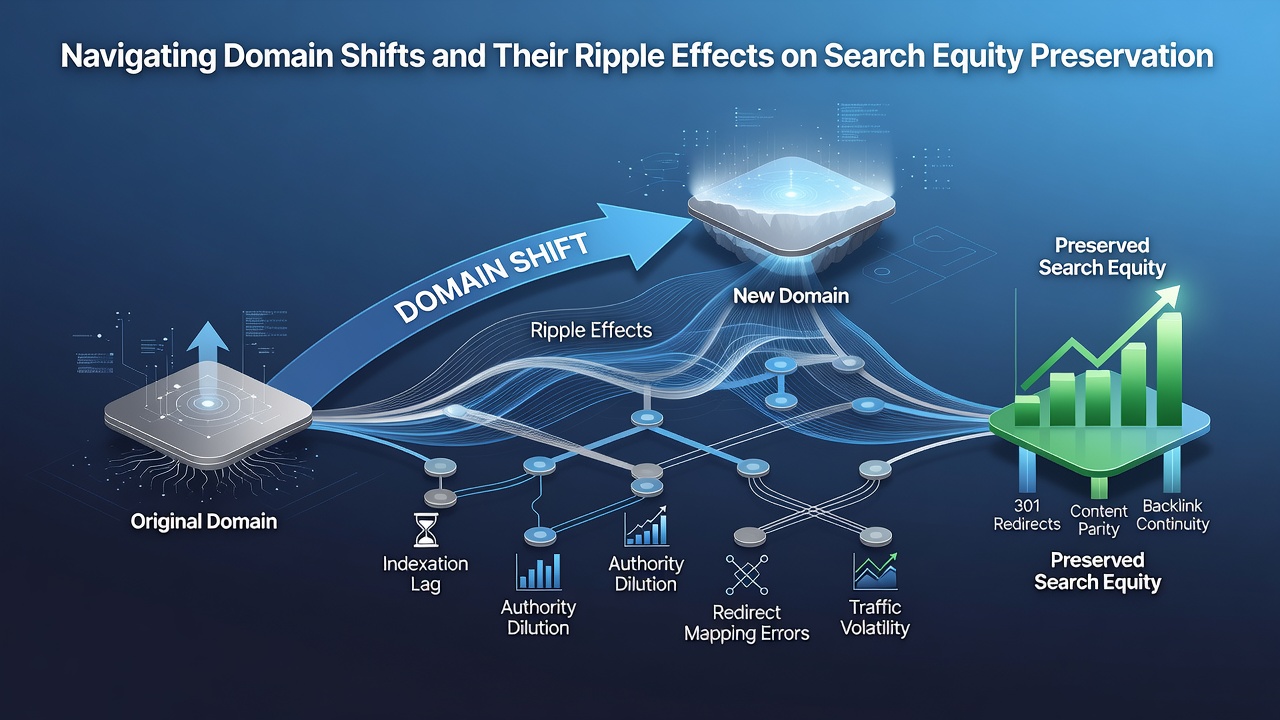
Domain shifts occur when organizations move websites from one domain name to another, a process that requires careful handling of technical elements like redirects and index signals to maintain visibility in search results. Research indicates that improper execution during these transitions can lead to temporary or prolonged drops in organic traffic because search engines must re-evaluate the new domain's authority and content relevance. Data from multiple industry analyses shows that sites undergoing migrations without comprehensive planning experience measurable declines in keyword rankings, with recovery timelines varying based on the scale of the change and the strength of existing backlink profiles.
Core Mechanics of Domain Transitions
Technical steps in a domain shift include updating DNS records, implementing server-side redirects, and submitting new sitemaps through search console tools, all of which help search engines discover and process the relocation efficiently. Observers note that 301 redirects serve as the primary mechanism for passing equity from the old domain to the new one, yet incomplete redirect chains or missing canonical tags can fragment that flow and create indexing gaps. Studies conducted by web analytics firms reveal that sites which audit their full URL structures before migration retain higher percentages of their original search visibility compared to those that address issues reactively after the switch.
Content duplication risks emerge when both old and new domains remain accessible simultaneously without proper signals, prompting search engines to split rankings between versions rather than consolidating them under the preferred domain. Those who have managed large-scale migrations point out that phased rollouts, where sections of the site move incrementally, allow teams to monitor indexation status in real time and adjust tactics before full completion.
Effects on Authority Signals and Rankings
Search equity encompasses accumulated authority from backlinks, user engagement metrics, and historical performance data, all of which can experience disruption when domain names change because algorithms treat the new address as potentially distinct until sufficient signals confirm continuity. Figures from longitudinal tracking studies demonstrate that domains with robust external link networks recover faster post-migration, while newer or less-linked sites face extended periods of reduced visibility. What's interesting is how internal linking structures also influence outcomes, as they help distribute equity across pages and signal topical relevance during the re-crawling phase.
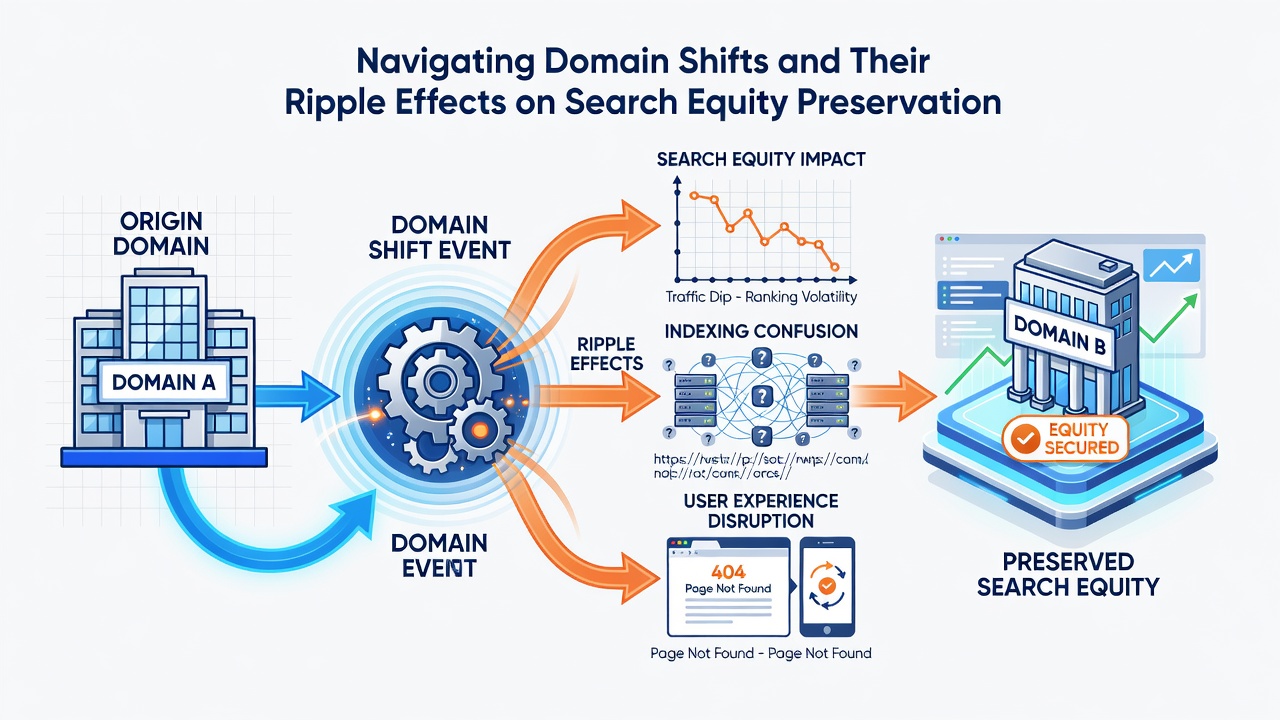
One analysis of enterprise websites found that migrations completed without link audits resulted in an average 15 to 30 percent loss in referring domain authority during the initial months, although targeted outreach to update high-value backlinks mitigated some of those effects. Experts have observed that mobile-first indexing and page experience signals add further layers of complexity, since any changes to site speed or structured data during the transition can compound ranking volatility.
Monitoring and Mitigation Approaches
Search console data provides the clearest view of indexing status and crawl errors throughout a domain shift, enabling teams to identify and resolve issues such as blocked resources or duplicate content flags before they escalate. Research indicates that combining console insights with third-party rank tracking tools creates a more complete picture of equity preservation, particularly when comparing pre- and post-migration performance across key query sets. Organizations that establish baseline metrics well in advance maintain better control over outcomes, as deviations become easier to attribute directly to the migration rather than external algorithm fluctuations.
Link reclamation efforts play a central role when authority signals weaken, involving outreach to referring sites to update URLs and ensure equity continues flowing to the new domain. Data shows that proactive communication with partners and directories accelerates recovery, while delayed action leaves gaps that competitors may fill in search results. In September 2026, anticipated refinements to how search engines handle site migrations are expected to emphasize faster re-evaluation protocols, potentially shortening recovery windows for well-prepared transitions.
Conclusion
Effective navigation of domain shifts hinges on systematic preparation, continuous monitoring, and targeted adjustments that safeguard the accumulated value built over time. Evidence from multiple tracking initiatives confirms that organizations applying structured approaches experience more stable outcomes, preserving visibility while minimizing disruption to established search positions. As digital landscapes evolve, the principles of maintaining redirect integrity, updating all references, and validating indexation remain central to successful equity preservation across changing domain environments.